

Made to Your Own Measure
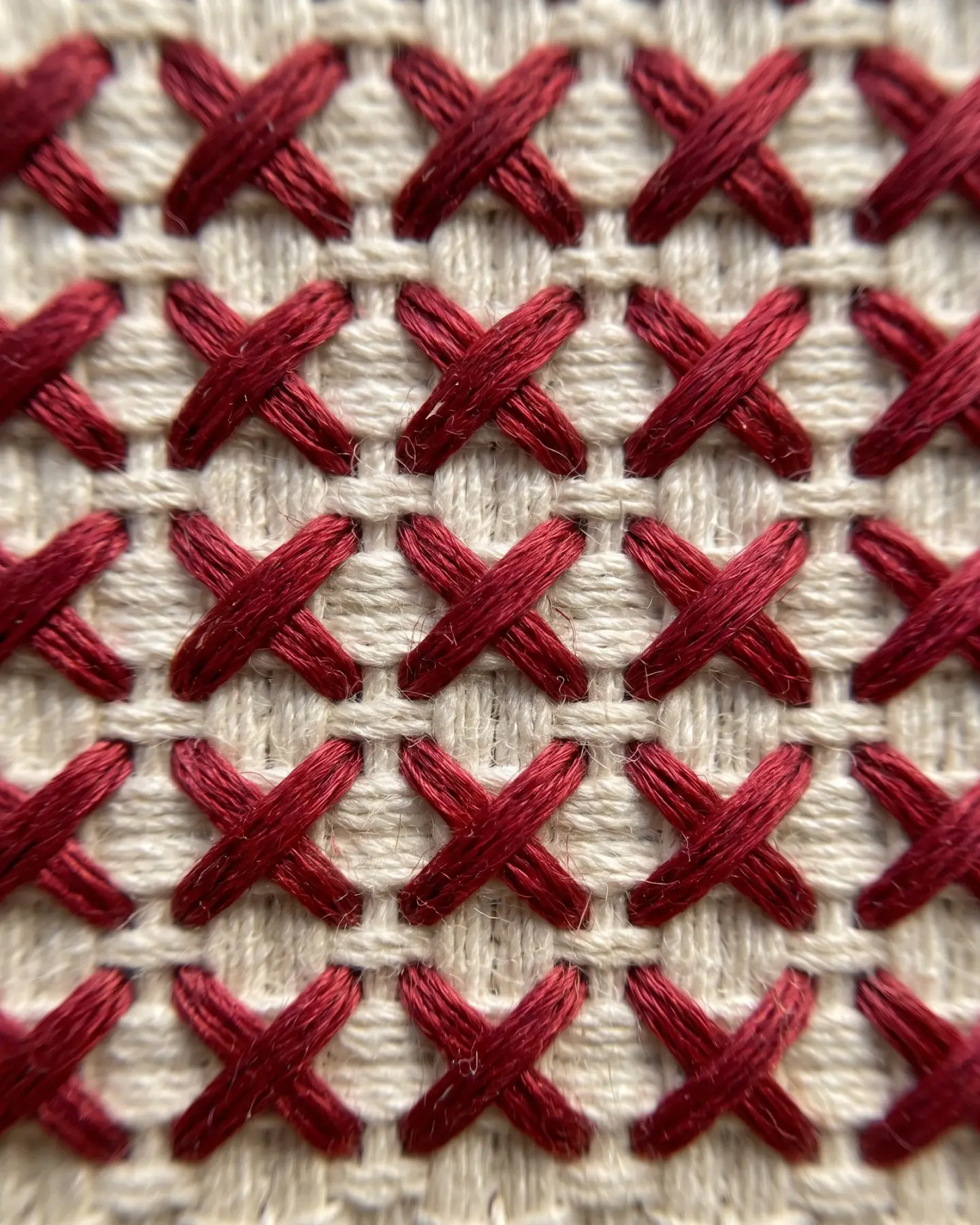
Choose the cloth, the colour, the motif, the stitch and the thread colours. Your measurements are read by a person, not matched to a chart. The piece is then cut and embroidered by hand — for you, once.
The atelier takes a fixed number of made-to-order pieces each month, because a hand-embroidered garment cannot be hurried. What is left is counted from real orders, live.
The Atelier
Made to order
Custom orders are closed until December 31
The atelier accepts five made-to-order pieces each month.
How your piece is made
From the first choice to the finished piece, in the order the cloth requires. Each decision is made on the piece itself, in the wizard on its product page.
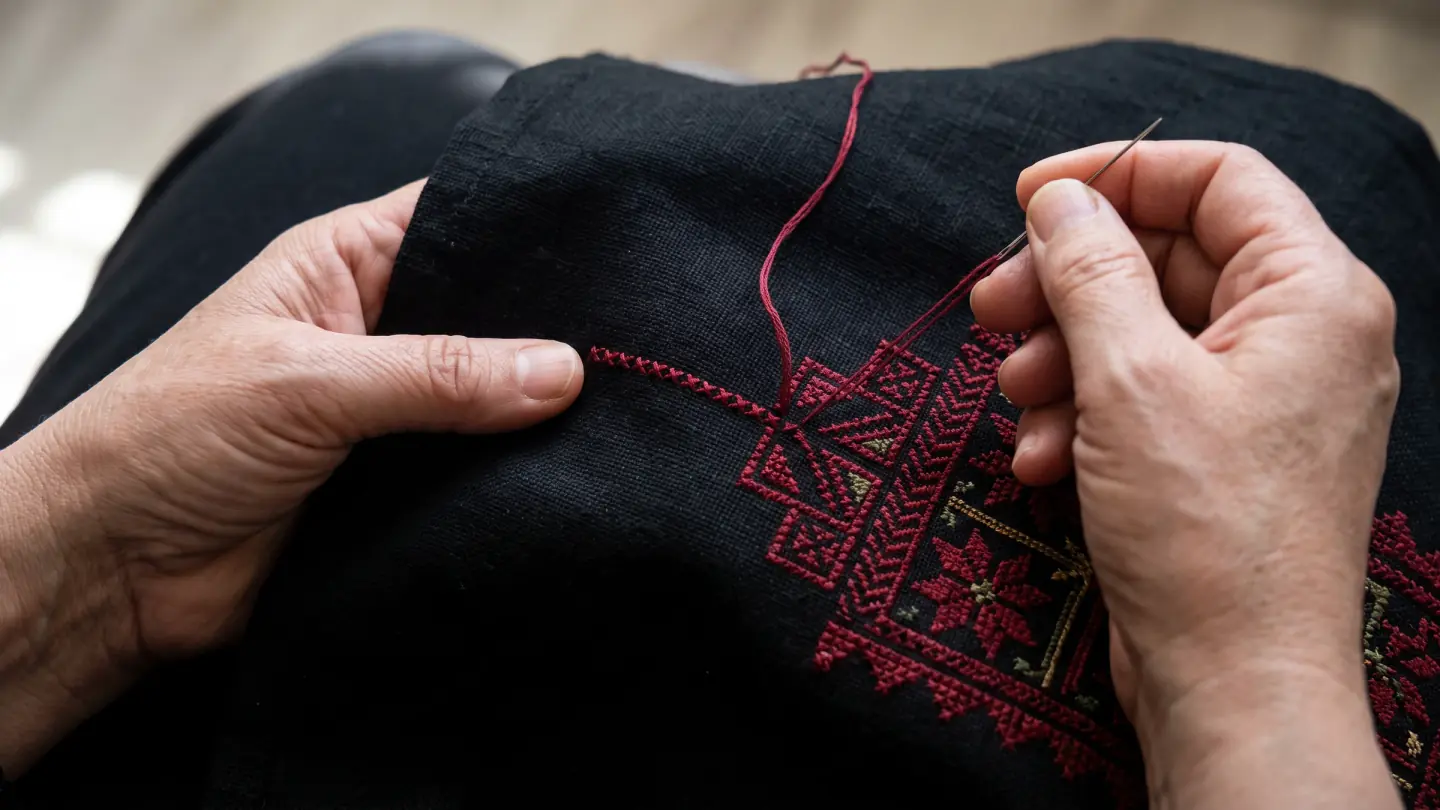
Begin from the piece
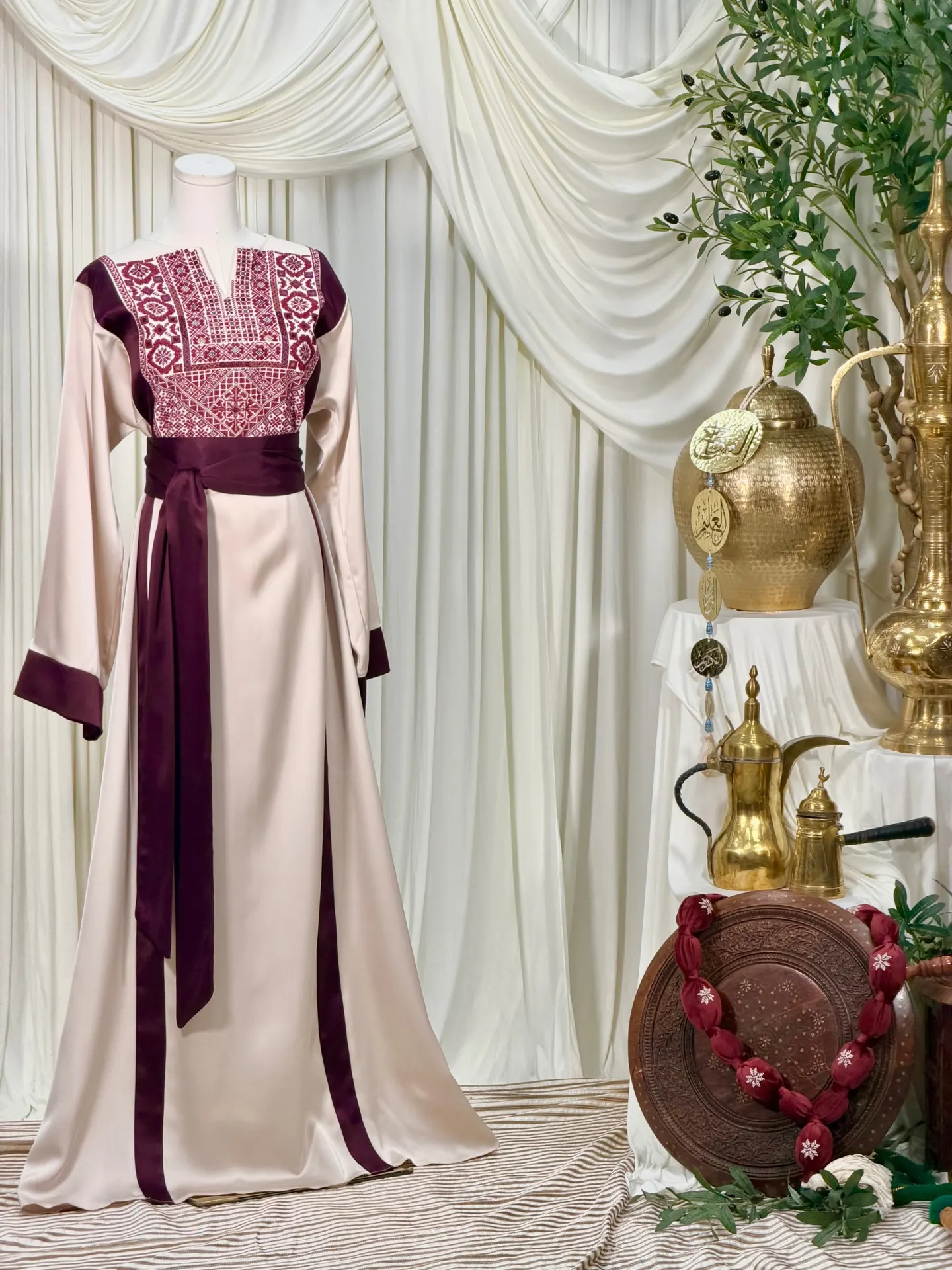
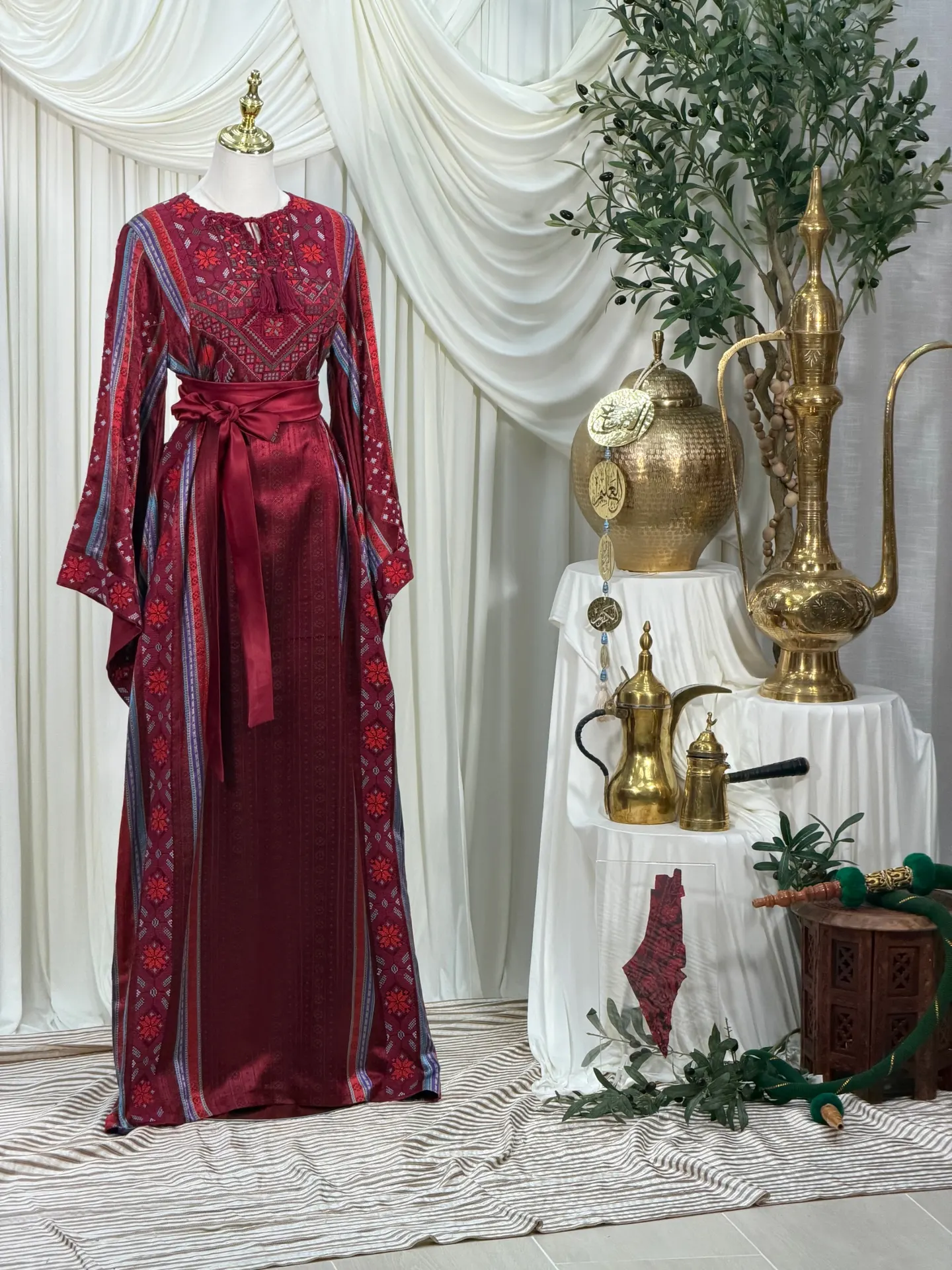
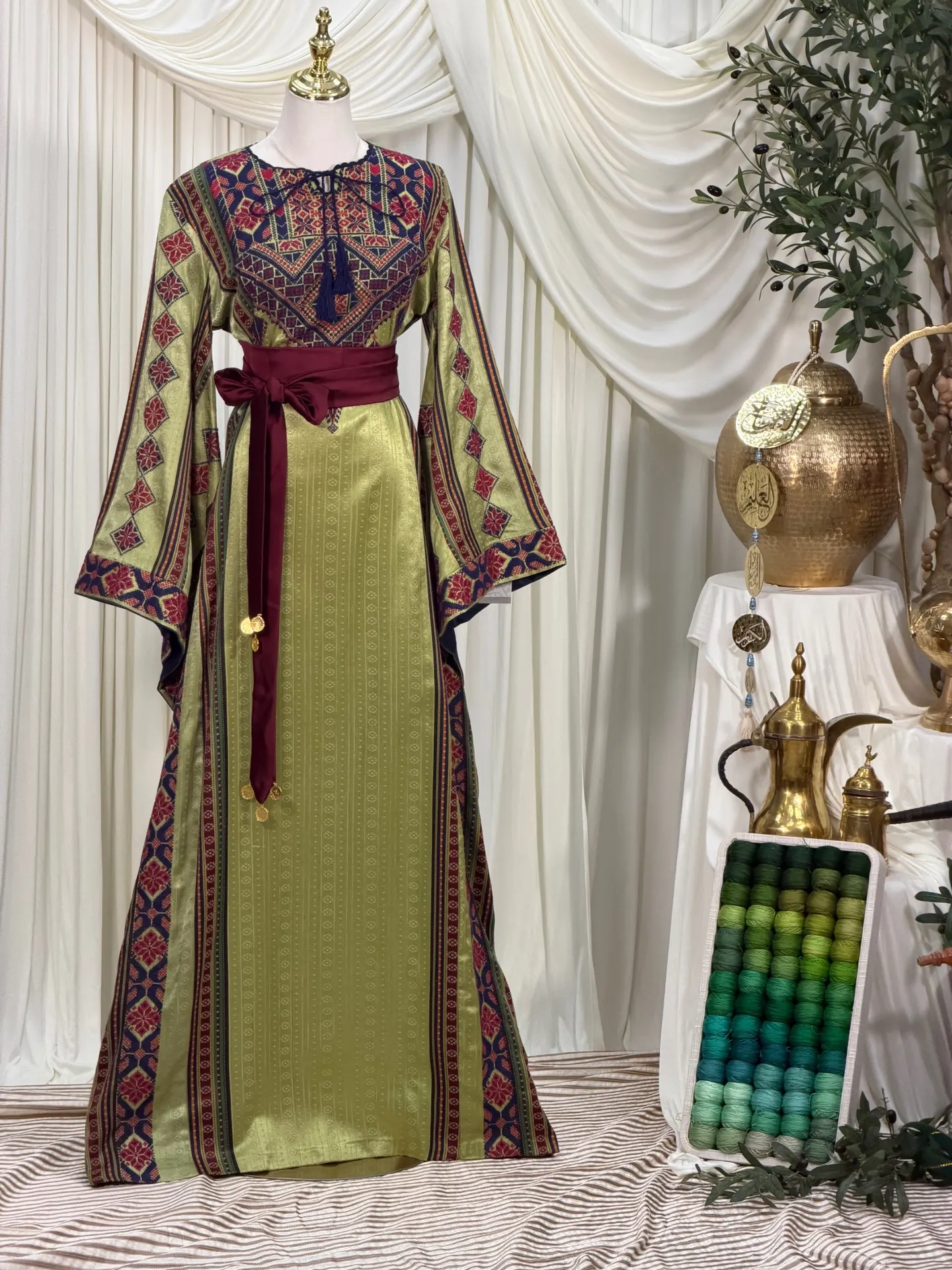
Malaka, falahi, floral or modern, drawn from 10 regional traditions — this is the vocabulary the atelier works in. Choose the piece whose character you want made for you; the wizard then asks only what remains to decide.
Choose the cloth
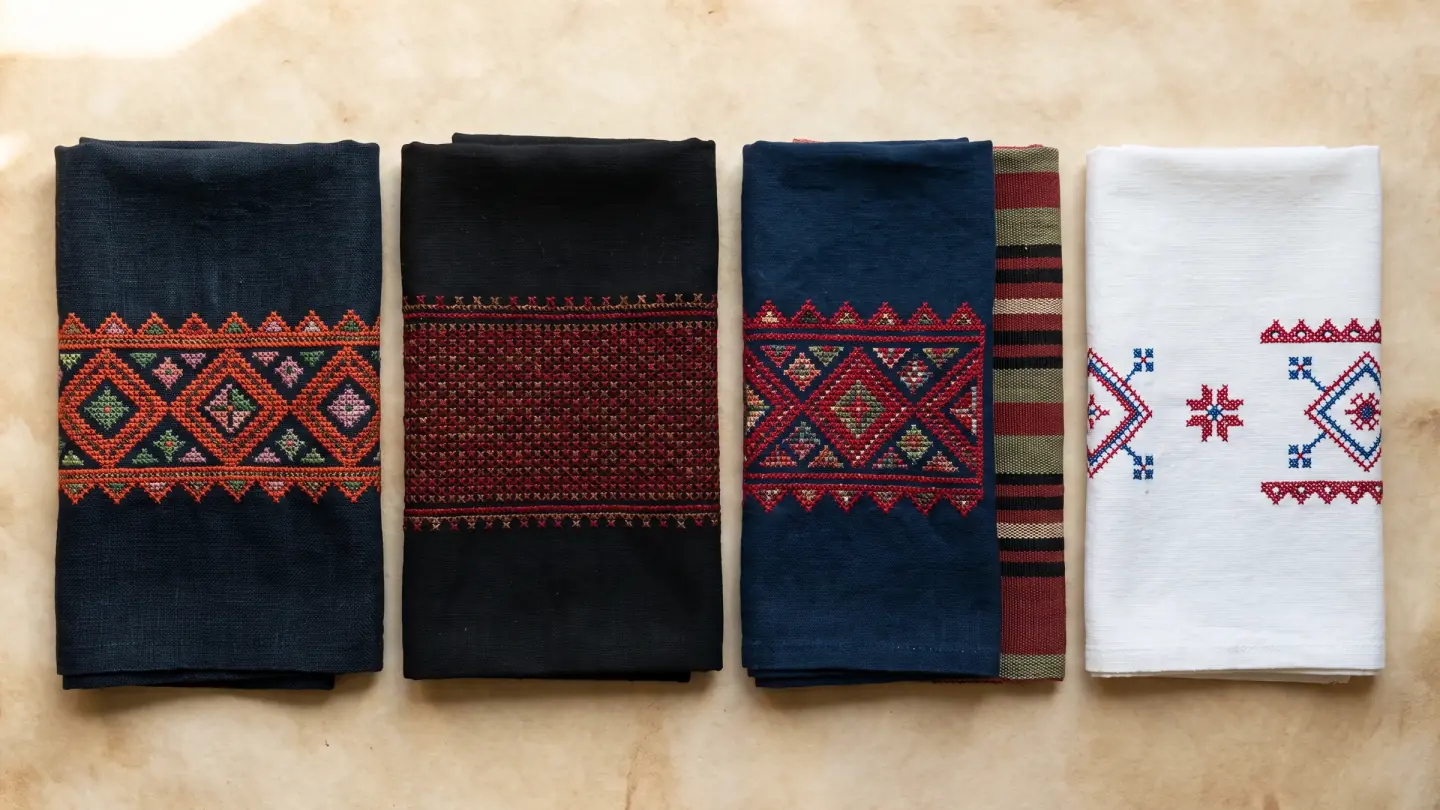
Crepe, ettameen, raw silk, linen, kashmir, velvet or chiffon — 8 grounds in all, in 38 colours. Ettameen is the even-weave cotton that gives counted tatreez its regular grid. The cloth decides how the piece falls and how the stitching sits on it, so it is the choice everything else answers to.
Choose the motif and the stitch
26 motifs and 7 stitches, each with a note from the atelier that you read as you choose. The stitch is the labour, and the labour is the piece.
Measured to you
Your own measurements are taken as you customize — 16 measures for a custom order, rather than a size chart — and every set is read by a person before a single length of cloth is cut.
Made by hand, then shipped
The piece is cut and embroidered by hand for you alone. A thoub takes two to four months; a bridal piece takes six to nine, because of how dense the embroidery is. Your balance is invoiced when it is ready, and it ships from Tempe, Arizona.
The Cloth
38 ground colours
The colour of the cloth your piece is made from — before a single stitch is worked into it. Thread is chosen against it afterwards.
Browse the full thread colour chart- Black
- White
- Ivory
- Off White
- Navy
- Royal Blue
- Teal
- Emerald Green
- Olive
- Maroon
- Burgundy
- Red
- Coral
- Blush Pink
- Dusty Rose
- Mustard
- Terracotta
- Gray
- Beige
- Brown
- Purple
- Baby Blue
- Dark Green
- Sage Green
- Chocolate Brown
- Lavender
- Hot Pink
- Dark Grey
- Butter Yellow
- Fuchsia
- Copper
- Turquoise
- Gold
- Silver
- Pistachio
- Jannah wa Nar
- Peach
- Mint
What you decide, in the atelier’s own words
Every fabric, style and stitch below is described by the woman who works them. Nothing here is a marketing paraphrase.
Fabric
The ground cloth your piece is made from.
- Crepe
- crepe, a fluid luxury satin-weave with a soft matte drape
- Ettameen
- ettameen, the even-weave cotton ground cloth that gives counted cross-stitch tatreez its crisp, regular grid
- Raw Silk
- raw silk, prized for its natural slubbed texture and quiet luster
- Linen
- natural linen, the historic ground cloth of Palestinian village embroidery, prized for its breathable strength
- Kashmir
- kashmir, a finely woven shawl-weight cloth with a soft, warm hand
- Velvet
- rich velvet, the luxurious ground long favored for festive and bridal pieces
- Chiffon
- sheer chiffon, lending an airy, flowing lightness to the garment
- Habbar
- habbar, a traditional fabric of Palestinian dressmaking, chosen for custom pieces for its structured drape
Style
The overall embroidery style of the piece.
- Malaka
- the regal malaka style — densely embroidered with gold and metallic thread in the manner of a bride's crowning thobe
- Falahi
- the falahi village style, rooted in the everyday tatreez of Palestinian peasant dress
- Floral
- a floral style, its blossoms and trailing vines drawn from the gardens and orchards of historic Palestine
- Modern
- a modern style that reinterprets traditional tatreez for a contemporary wardrobe
Stitch
Choose every technique you would like — a thoub can carry cross-stitch, tahriri and manajel in one piece.
- Fallahi Cross-Stitch
- worked in the fallahi cross-stitch (tatreez) that forms the backbone of Palestinian village embroidery, each stitch counted by hand
- Tahriri Couching
- finished with tahriri couching, the fine cording technique of Bethlehem that raises floral and scroll motifs from the cloth
- Manajel
- accented with manajel zigzag bands, the connective borders that frame the panels
- Kasab
- Crochet
- Habka
- border of the sleeves and neckline
- Beading
Motifs and regions
Each of these carries a note from the atelier explaining what it is and where it comes from. The motif is yours to choose as you customize; the regional tradition belongs to the piece itself.
Motif
The motif worked into the embroidery, and what it carries.
- Cypress Tree (Sarw, السرو)
- Tree of Life (Shajarat al-Hayat, شجرة الحياة)
- Palm Tree (Nakhleh, النخلة)
- Grapevine (ʿInab, عنب)
- Wheat (Sumbuleh, سنبلة)
- Olive Branch (Zaytoun, زيتون)
- Pomegranate (Rumman, رمان)
- Floral Rosettes (Ward, ورد)
- Rose (Warda, وردة)
- Carnation (Qaranful, قرنفل)
- Cockscomb (ʿUrf al-Dik, عرف الديك)
- Feathers (Rish, ريش)
- Birds (Tuyur, طيور)
- Rooster (Deek, ديك)
- Dove (Hamama, حمامة)
- Peacock (Tawoos, طاووس)
- Fish (Samak, سمك)
- Eight-Pointed Stars (Nujum, نجوم)
- Moon / Crescent (Qamar / Hilal, قمر / هلال)
- Diamonds (Muʿayyanat, معينات)
- Triangles (Muthallathat, مثلثات)
- Comb (Musht, مشط)
- Key (Muftah, مفتاح)
- Amulet (Hijab, حجاب)
- Celestial Compositions (Moon-and-Feathers)
- Orange Blossom
Region
The Palestinian regional tradition the design draws on.
- Ramallah
- Bethlehem
- Hebron (Al-Khalil)
- Gaza
- Jaffa
- Galilee
- Nablus
- Beit Dajan
- Bedouin / Negev
- Contemporary
Plainly Stated
The deposit, and the wait
- Paid today
- A 50% deposit is collected when you place the order. The remaining 50% is invoiced before your piece ships — there is no payment in between, and no charge you have not already seen.
- Months of work
- A thoub takes two to four months. A bridal piece takes six to nine, because of how much embroidery it carries. Those are working ranges, not estimates dressed up as promises.
- Once work begins
- Because each piece is cut and embroidered specifically for you, all sales are final on made-to-order pieces once work begins — there are no returns or exchanges.
Begin with a piece
Every made-to-order piece starts from something in the collection. Choose the one you want made for you, and the choices above open on its page.
Questions worth asking
How long does a custom thoub take?
Two to four months from order to completion.
How long does a custom bridal piece take?
Six to nine months from order to completion, given the density of bridal embroidery.
How much do I pay today?
A 50% deposit is collected at checkout. The remaining balance is invoiced before your piece ships.
How are my measurements taken?
You enter your own measurements while customizing your piece — a full set of 16 measures for a custom order — and they are reviewed by a member of the team before any cloth is cut.
Can I cancel or return a made-to-order piece?
All sales are final on made-to-order pieces once work begins, because each one is cut and embroidered specifically for you.